
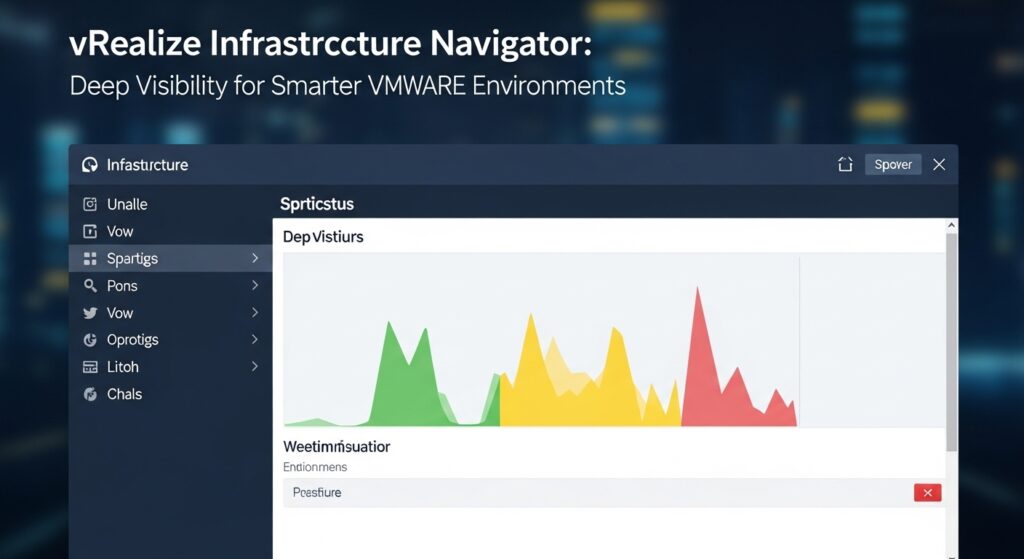
Modern IT environments are no longer simple collections of servers and applications. Virtualization, cloud adoption, and hybrid infrastructures have created complex ecosystems where understanding dependencies is just as important as managing performance. In this context, VMware introduced tools designed to bring clarity and insight to virtualized environments. One such tool is vRealize Infrastructure Navigator, a solution that played a key role in helping administrators visualize application relationships and infrastructure dependencies.
Understanding the Need for Application Dependency Visibility
The Challenge of Modern Virtualized Environments
As organizations virtualized workloads, many gained efficiency but lost visibility. Applications that once ran on dedicated servers became distributed across multiple virtual machines. This made it difficult to answer critical questions such as:
-
Which virtual machines support a specific business application?
-
What services will be affected if a VM is powered down?
-
How do applications communicate across the virtual infrastructure?
Without clear answers, routine tasks like maintenance, troubleshooting, and capacity planning became riskier.
Why Dependency Mapping Matters
Application dependency mapping provides a visual representation of how workloads interact. It allows IT teams to understand not only what exists in the environment, but also how everything is connected. This insight reduces downtime, improves planning accuracy, and supports better decision-making.
vRealize Infrastructure Navigator was designed specifically to address these challenges within VMware-based infrastructures.
What Is vRealize Infrastructure Navigator?
Overview of the Tool
vRealize Infrastructure Navigator was a VMware solution that delivered application-aware visibility inside virtual environments. Instead of focusing solely on infrastructure metrics like CPU or memory usage, it discovered and mapped relationships between virtual machines, applications, and services.
By integrating directly with VMware vCenter, the tool provided real-time dependency information without requiring agents inside guest operating systems.
Core Purpose
The primary purpose of vRealize Infrastructure Navigator was to help administrators:
-
Identify applications running within virtual machines
-
Discover service dependencies automatically
-
Visualize relationships in an intuitive interface
-
Reduce risk during infrastructure changes
This made it especially valuable in enterprise data centers where hundreds or thousands of workloads were running simultaneously.
Key Features and Capabilities
Agentless Application Discovery
One of the standout features was its agentless architecture. Instead of installing software on every VM, the solution analyzed network traffic and system behavior to identify applications and services.
This approach reduced administrative overhead and eliminated concerns about performance impact or compatibility issues inside guest operating systems.
Automated Dependency Mapping
The tool automatically detected how applications communicated with each other. For example, it could identify:
-
Web servers connected to application servers
-
Application servers communicating with databases
-
External services accessed by internal workloads
These relationships were presented visually, allowing administrators to quickly grasp complex environments.
Integration with vCenter Server
Because it was tightly integrated with VMware vCenter, vRealize Infrastructure Navigator extended the existing management interface rather than introducing an entirely new workflow. Administrators could view application dependencies directly from the vSphere client.
This seamless integration improved adoption and reduced the learning curve.
Change Impact Analysis
One of the most practical benefits was the ability to assess change impact. Before migrating, powering down, or modifying a VM, administrators could see which applications and services depended on it.
This capability helped prevent accidental outages and supported safer maintenance windows.
How vRealize Infrastructure Navigator Worked
Network Traffic Analysis
The solution analyzed network flows between virtual machines to infer application relationships. By observing communication patterns, it could determine which services were running and how they interacted.
This passive approach allowed continuous discovery without disrupting production workloads.
Application Signature Recognition
vRealize Infrastructure Navigator used predefined signatures to recognize common enterprise applications such as:
-
Web servers
-
Databases
-
Middleware platforms
-
Messaging systems
These signatures allowed it to classify workloads accurately and present meaningful information to administrators.
Real-Time Updates
As environments changed, the dependency maps updated automatically. New virtual machines, services, or communication paths were reflected without manual intervention.
This ensured that the information remained relevant even in dynamic environments.
Benefits for IT Operations Teams
Improved Troubleshooting
When performance issues or outages occurred, administrators could quickly identify upstream or downstream dependencies. This reduced mean time to resolution and minimized business impact.
Safer Infrastructure Changes
Maintenance tasks such as VM migrations, upgrades, or decommissioning carried less risk. Dependency visibility allowed teams to plan changes confidently and communicate potential impacts to stakeholders.
Better Collaboration Between Teams
Infrastructure, application, and operations teams often work in silos. A shared dependency map provided a common understanding of how systems were interconnected, improving collaboration and accountability.
Enhanced Documentation
Many organizations struggle to keep documentation up to date. Automated discovery reduced reliance on manual diagrams and spreadsheets, ensuring documentation reflected reality.
Use Cases in Real-World Environments
Data Center Consolidation
During consolidation projects, understanding application dependencies is critical. vRealize Infrastructure Navigator helped identify which workloads could be moved together and which required special handling.
Disaster Recovery Planning
Dependency information supported more accurate disaster recovery plans. Teams could ensure that critical services were restored in the correct order during failover scenarios.
Application Modernization
When modernizing or refactoring applications, understanding existing architecture is essential. The tool provided insights into legacy application structures that were often poorly documented.
Limitations and Challenges
Scope Limited to VMware Environments
The tool was designed specifically for VMware-based infrastructures. Organizations with multi-hypervisor or mixed cloud environments needed additional solutions for full visibility.
Dependency Accuracy
While network-based discovery was powerful, it could not always identify application logic or business-level dependencies. Some complex relationships still required manual validation.
Evolution of VMware’s Product Portfolio
As VMware expanded its management offerings, some features of vRealize Infrastructure Navigator were absorbed into other tools. This led to changes in availability and long-term support.
Lifecycle and Product Evolution
Transition Within VMware Ecosystem
Over time, VMware integrated application discovery and dependency mapping capabilities into broader platforms such as vRealize Operations and other cloud management solutions.
This evolution reflected a shift toward unified, analytics-driven management tools rather than standalone products.
Lessons Learned
Although the original tool is no longer a primary offering, its concepts remain relevant. Modern infrastructure management continues to rely heavily on visibility, automation, and application awareness.
Relevance in Today’s IT Landscape
From Virtualization to Hybrid Cloud
Today’s environments often span on-premises data centers, public clouds, and container platforms. The need for dependency visibility has grown rather than diminished.
The principles introduced by vRealize Infrastructure Navigator still influence how modern tools approach application discovery.
Influence on Modern Observability Platforms
Many contemporary observability and application performance management solutions build upon the same ideas:
-
Automatic discovery
-
Relationship mapping
-
Visual representations of complex systems
These platforms extend the concept beyond virtual machines to include containers, microservices, and cloud-native architectures.
Best Practices Inspired by vRealize Infrastructure Navigator
Prioritize Visibility Before Change
Whether upgrading infrastructure or migrating to the cloud, visibility should come first. Understanding dependencies reduces risk and improves outcomes.
Automate Where Possible
Manual documentation cannot keep up with dynamic environments. Automated discovery tools provide more accurate and timely insights.
Align Infrastructure with Business Services
Mapping technical components to business applications helps IT teams focus on what matters most and communicate value to stakeholders.
Final Thoughts
vRealize Infrastructure Navigator represented an important step forward in VMware’s approach to infrastructure management. By making applications visible within virtual environments, it addressed one of the most pressing challenges faced by IT teams: understanding how everything fits together.
While the tool itself has evolved within VMware’s broader ecosystem, its core ideas remain essential. Dependency awareness, automated discovery, and application-centric management are now foundational principles in modern IT operations.
For organizations managing complex environments, the legacy of vRealize Infrastructure Navigator serves as a reminder that clarity and visibility are not luxuries—they are necessities for stable, efficient, and resilient infrastructure.