
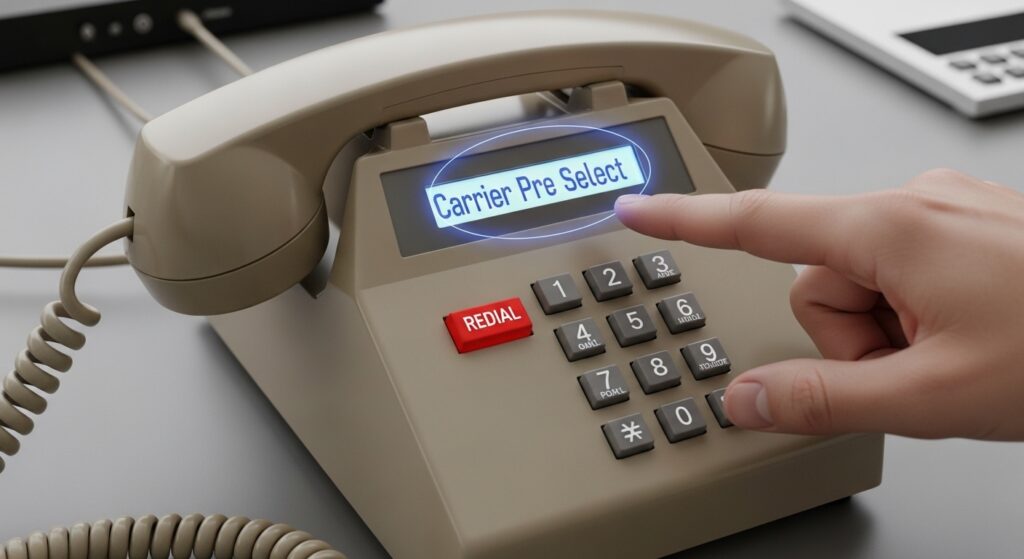
In the constantly evolving world of telecommunications, convenience and efficiency remain central to how communication services are designed and delivered. One feature that has quietly transformed the way telephone users connect to service providers is carrier pre select. This telecom capability allows users to automatically route their calls through a chosen telecommunications carrier without the need to dial additional access codes or manually select a provider for each call.
The concept behind carrier pre select emerged during a period when telecom markets were transitioning from monopolies to competitive environments. Governments and regulatory authorities across many countries began opening telecommunications markets to multiple service providers. As a result, customers needed a practical way to choose their preferred carrier while still using the same phone line. Carrier pre select provided that solution by enabling a default operator to handle outgoing calls automatically.
For both residential and business users, this feature introduced a new level of flexibility in choosing telecommunication services. Instead of relying solely on the default network operator, customers could opt for a different provider offering better pricing, improved service quality, or specialized calling plans. Once configured, carrier pre select works in the background, simplifying the calling process while ensuring the selected carrier manages the call routing.
Today, the relevance of carrier pre select continues in various telecommunications systems, particularly in regions where traditional landline infrastructure remains active. While modern technologies such as Voice over Internet Protocol (VoIP) and mobile networks dominate communication, carrier pre select still illustrates an important milestone in the evolution of open telecom markets and consumer choice.
Understanding the Basic Concept of Carrier Pre Select
The primary idea behind carrier pre select is to allow a telephone user to designate a preferred telecommunications carrier that automatically handles outgoing calls. This configuration is set once through the local network operator and remains active until the customer decides to change it.
In earlier telecom environments, users who wanted to make calls through a different provider had to dial special access codes before each call. These codes directed the call through an alternative network operator. Although this system provided flexibility, it required additional effort from the user and sometimes caused confusion.
Carrier pre select simplified the process by eliminating the need for manual carrier selection. Once activated, the system automatically routes calls through the chosen provider, allowing the user to dial numbers normally without any additional steps.
The mechanism works by linking the user’s telephone line with a specific telecommunications carrier within the network infrastructure. When a call is initiated, the system checks the configuration associated with the line and directs the call to the selected carrier’s network for processing.
This functionality benefits both customers and telecom providers. Customers gain the convenience of automatic routing and potentially lower calling costs, while service providers can compete more effectively by offering attractive pricing plans and value-added services.
The History and Development of Carrier Pre Select
The development of carrier pre-selection is closely tied to the liberalization of telecommunications markets during the late twentieth century. In many countries, national telecom companies once held exclusive control over telephone services. As technology advanced and regulatory frameworks changed, governments began allowing multiple companies to enter the market.
Competition among telecom providers created the need for systems that would allow customers to choose their preferred carrier easily. Without such systems, switching between operators for each call would have been inconvenient and impractical.
Carrier pre select emerged as a regulatory and technical solution that balanced competition with user convenience. Regulators required network operators to support this feature so that customers could freely select alternative carriers without changing their physical phone lines.
The following table illustrates the stages of telecom market evolution that contributed to the development of carrier pre select.
| Telecom Era | Characteristics | Impact on Communication Services |
|---|---|---|
| Monopoly Era | Single national telecom provider | Limited consumer choice |
| Market Liberalization | Multiple telecom companies enter market | Increased competition |
| Carrier Selection Systems | Introduction of call-by-call carrier codes | Manual carrier switching |
| Carrier Pre Select | Automatic default carrier routing | Simplified provider choice |
This transition played a significant role in reshaping telecommunications industries around the world. By enabling customers to choose their preferred carriers easily, the system encouraged innovation and price competition among telecom companies.
How Carrier Pre Select Works in Telecommunications Networks
The operational framework of carrier pre select involves coordination between network infrastructure, regulatory requirements, and telecommunications service providers. When a user activates carrier pre select, the local network operator records the chosen carrier within the system that manages call routing.
Whenever a call is placed from the user’s telephone line, the network checks this stored configuration. Instead of routing the call through the default operator, the system directs it to the selected carrier’s network.
The process can be summarized through several technical stages that occur almost instantly during a call connection.
| Call Routing Stage | Description | Network Action |
|---|---|---|
| Dialing | User enters the phone number | Local exchange receives request |
| Configuration Check | Network identifies preferred carrier | Database lookup performed |
| Call Routing | Call sent to selected carrier’s network | Carrier processes connection |
| Call Completion | Destination phone receives call | Communication established |
Although the user experiences this process as a simple phone call, complex switching systems and databases work behind the scenes to ensure that the correct carrier handles the connection.
Modern telecom infrastructure often integrates these functions into digital switching systems capable of managing millions of calls simultaneously. This level of automation ensures that carrier pre select operates seamlessly without affecting call quality or connection speed.
Benefits of Carrier Pre Select for Consumers
One of the most significant advantages of carrier pre select is the convenience it provides to users. Once a preferred carrier is selected, customers no longer need to remember or dial special access codes before making calls. This simplicity improves the overall user experience and encourages more people to take advantage of competitive telecom services.
Another major benefit involves cost savings. Different carriers may offer various pricing plans, especially for international or long-distance calls. By selecting a carrier with favorable rates, users can reduce their communication expenses while maintaining the same telephone line.
The following table highlights several benefits associated with the use of carrier pre select.
| Benefit | Explanation | Result for Users |
|---|---|---|
| Automatic Call Routing | Calls routed through chosen carrier automatically | Increased convenience |
| Competitive Pricing | Ability to choose lower-cost providers | Reduced calling expenses |
| Service Flexibility | Users can change carriers when needed | Greater control over telecom services |
| Simplified Dialing | No additional codes required | Faster call initiation |
For businesses that rely heavily on telephone communication, these advantages can translate into substantial operational savings. Companies making frequent long-distance calls may choose carriers offering specialized corporate plans that significantly lower communication costs.
Carrier Pre Select in Business Telecommunications
Businesses often depend on reliable and cost-efficient communication systems to maintain daily operations. In this context, carrier pre select provides a strategic advantage by enabling organizations to select telecom providers that align with their communication needs.
Large companies frequently analyze their calling patterns to determine which carrier offers the most favorable pricing for their typical call destinations. By configuring carrier pre select accordingly, they ensure that all outgoing calls automatically use the chosen provider’s network.
This arrangement can simplify billing management as well. Instead of managing multiple service providers for different types of calls, businesses can consolidate their telecommunications expenses through a single carrier.
The table below illustrates how carrier pre select supports business communication strategies.
| Business Requirement | Role of Carrier Pre Select | Operational Advantage |
|---|---|---|
| High Call Volume | Automatic routing through chosen carrier | Consistent pricing structure |
| International Communication | Selection of carrier with global rates | Lower international costs |
| Billing Efficiency | Centralized service provider | Simplified accounting |
| Operational Reliability | Stable telecom routing system | Improved communication stability |
By integrating carrier pre select into their telecommunications infrastructure, businesses can streamline communication management while maintaining flexibility to adjust providers when necessary.
Regulatory Framework Surrounding Carrier Pre Select
Telecommunications regulations play an essential role in supporting the functionality of carrier pre select. Many governments introduced regulatory policies to ensure fair competition among telecom operators and protect consumer choice.
These regulations often require network operators to allow third-party carriers access to their infrastructure. Without such policies, dominant operators might restrict competition and limit the availability of alternative services.
Regulators typically establish guidelines covering technical standards, service quality requirements, and procedures for switching carriers. These rules ensure that customers can activate or change carrier pre select settings without unnecessary barriers.
The table below outlines several regulatory objectives related to carrier pre select systems.
| Regulatory Objective | Description | Benefit for Telecom Market |
|---|---|---|
| Consumer Choice | Allow users to select preferred carriers | Increased market competition |
| Fair Network Access | Ensure equal infrastructure usage | Balanced industry environment |
| Transparent Pricing | Require clear pricing information | Improved consumer awareness |
| Service Reliability | Maintain quality standards | Consistent communication services |
By enforcing these regulations, authorities help maintain a competitive telecommunications landscape where multiple providers can offer services to customers.
Challenges Associated with Carrier Pre Select
Despite its advantages, carrier pre select also presents certain challenges within telecommunications systems. One issue involves the complexity of network coordination among multiple carriers. Accurate call routing requires reliable databases and synchronization between different telecom networks.
Another challenge relates to customer awareness. Many telephone users may not fully understand how carrier pre select works or how it could benefit them. As mobile and internet-based communication platforms become more dominant, awareness of traditional telecom features sometimes declines.
Billing disputes can also occur when calls are routed through different carriers. Clear documentation and transparent billing systems are necessary to ensure that customers understand which provider handled specific calls.
Technological shifts present another challenge. As communication increasingly moves toward internet-based services, traditional landline features may become less prominent. However, in regions where landline networks remain active, carrier pre select continues to provide valuable functionality.
The Future of Carrier Pre Select
The telecommunications industry is constantly evolving, influenced by technological innovation and changing consumer behavior. While newer technologies such as mobile networks and VoIP services dominate modern communication, carrier pre select still holds historical and functional significance within traditional telecom infrastructures.
In some regions, the concept behind carrier pre-selection is being adapted to digital communication platforms. For example, internet-based calling services often allow users to choose preferred routing providers or international gateways that optimize call quality and cost.
Advancements in telecommunications software may also allow more dynamic carrier selection systems. Instead of relying on a fixed carrier configuration, future systems could automatically select the most efficient provider based on real-time network conditions and pricing.
These developments reflect the broader trend toward intelligent communication networks capable of optimizing performance and cost simultaneously.
Conclusion
The concept of carrier pre select represents an important chapter in the history of telecommunications. Developed during the transition from monopoly telecom markets to competitive service environments, this feature provided users with a convenient method of choosing their preferred carrier without altering their telephone lines.
By enabling automatic call routing through a selected provider, carrier pre select simplified the process of accessing competitive telecom services. Consumers benefited from greater convenience and potential cost savings, while businesses gained new opportunities to manage communication expenses more effectively.
Although modern communication technologies have introduced new methods of connecting people worldwide, the principles behind carrier pre select continue to influence how telecommunications systems are designed. The emphasis on consumer choice, network interoperability, and competitive service offerings remains central to the ongoing evolution of global communication networks.
As the telecom industry continues to advance, the legacy of carrier pre select serves as a reminder of how innovative solutions can reshape entire industries and empower users with greater control over their communication services.