
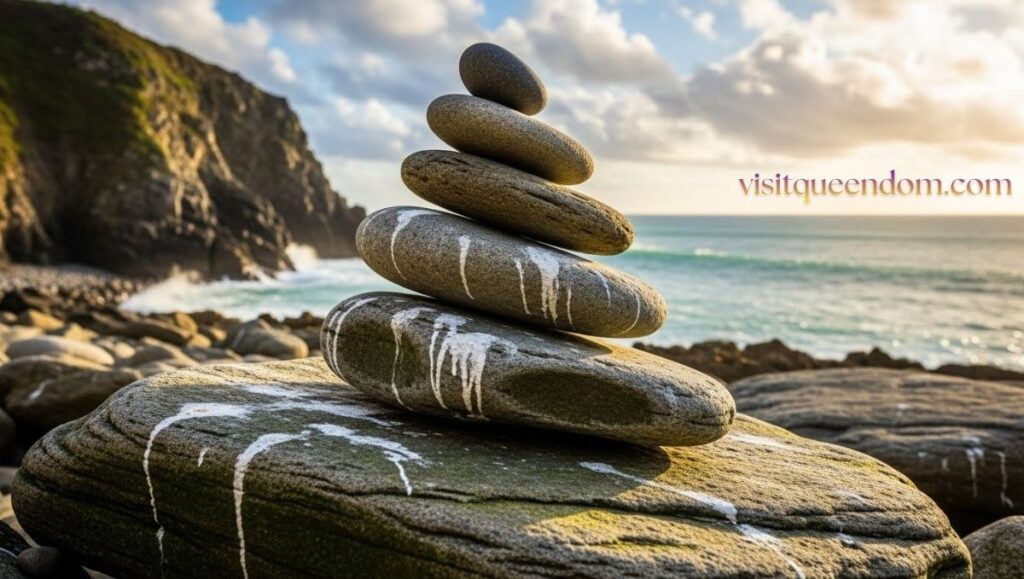
Across deserts, mountains, riverbanks, and coastlines, you may stumble upon a strange and fascinating sight: rocks stacked carefully on top of other rock. Sometimes they look intentional, almost artistic. Other times, they seem impossible, as if gravity briefly took a break. These formations—commonly referred to as rocks on top of rocks—have captured human curiosity for centuries.
Whether shaped by natural forces or human hands, these rocky arrangements tell stories about geology, balance, culture, and even mindfulness. What appears simple at first glance often carries deeper meaning and surprising complexity.
How Rocks End Up on Top of Other Rocks Naturally
The Power of Erosion and Time
Nature is an expert sculptor. Wind, water, ice, and temperature changes constantly reshape the landscape. Over long periods, erosion can carve rocks into forms that allow one stone to rest perfectly atop another.
In deserts, for example, wind erosion slowly removes softer rock layers, leaving behind harder stone that appears balanced. In colder climates, freeze-thaw cycles cause rocks to crack, shift, and settle in unexpected ways.
Glacial Movement and Deposits
During the Ice Age, massive glaciers carried rock across great distances. When the ice melted, these stones—called glacial erratics—were sometimes left perched on bedrock or other rocks. To the untrained eye, they appear carefully placed, yet their position is the result of slow, powerful natural movement.
These formations are some of the most dramatic examples of rock on top created entirely without human involvement.
Human-Made Rock Stacking Through History
Ancient Cultural Significance
Humans have stacked rocks for thousands of years. In many ancient cultures, these formations served practical and spiritual purposes. Cairns, for instance, were used as trail markers, burial monuments, or sacred symbols.
In Celtic regions, stacked stones were believed to guide travelers and protect them from harm. In parts of Asia, balanced rock represented harmony and the connection between earth and sky.
Modern Rock Balancing as Art
Today, rock stacking has evolved into a form of creative expression. Artists carefully balance stones without glue or tools, relying solely on patience and an understanding of weight distribution.
This modern practice is often seen in parks, beaches, and rivers. While visually stunning, it also raises questions about environmental impact and respect for natural spaces.
The Science Behind Rock Balance
Center of Gravity and Stability
Balancing rocks is not magic—it’s physics. Every rock has a center of gravity. When that center is positioned over a stable base, even irregular stones can stand upright or balance on surprisingly small points.
Some rocks have natural indentations or flat edges that make stacking easier. Others require precise placement and gentle adjustments to achieve stability.
Friction and Surface Texture
The texture of a rock plays a significant role in balance. Rough surfaces create more friction, helping stones grip each other. Smooth rocks, such as those shaped by water, are more challenging to stack but can still be balanced with enough patience.
These physical properties explain why certain environments, like riverbeds, are popular places to see rocks on top.
Psychological and Emotional Appeal
A Symbol of Balance and Calm
For many people, stacked rocks symbolize balance, patience, and inner peace. The act of placing one rock on another requires focus and stillness, making it a form of moving meditation.
That’s why images of balanced stones often appear in wellness spaces, yoga studios, and mindfulness content. They visually represent stability in a chaotic world.
The Satisfaction of Creation
There is a deep sense of accomplishment in creating something temporary yet beautiful. Unlike permanent structures, rock stacks are fragile and fleeting, reminding us to appreciate the moment rather than the outcome.
This impermanence is part of their charm.
Environmental Considerations and Controversy
When Rock Stacking Becomes a Problem
While rock stacks may look harmless, excessive stacking can disrupt natural ecosystems. Moving rocks can destroy habitats for insects, plants, and small animals that rely on the shelter beneath them.
In some protected areas, park authorities discourage or ban rock stacking to preserve the natural landscape.
Respecting Nature While Enjoying It
If you choose to stack rock, it’s important to do so responsibly. Avoid disturbing sensitive areas, and consider dismantling the stack before leaving so the environment can return to its original state.
Nature doesn’t need decoration—it already has its own balance.
Famous Locations Known for Rock Formations
Balanced Rock in Utah
One of the most iconic natural examples is Balanced Rock in Arches National Park. This massive boulder sits precariously on a narrow base, shaped by millions of years of erosion.
It stands as a powerful reminder of how forces beyond human control can create awe-inspiring balance.
Stone Gardens and Coastal Stacks
In many coastal regions, visitors create temporary stone gardens near the shore. These formations are constantly reshaped by tides, making them ever-changing works of art.
They highlight the relationship between human creativity and natural power.
What Rocks on Top of Rocks Teach Us
At their core, rocks on top tell a story about balance—between strength and fragility, permanence and change, nature and human touch. They remind us that stability often comes from careful positioning rather than force.
Whether formed by glaciers, shaped by erosion, or balanced by patient hands, these formations invite us to slow down, observe, and reflect.
Final Thoughts
Rocks on top of rocks may seem simple, but they carry layers of meaning shaped by time, culture, and science. They exist at the intersection of nature’s power and human curiosity, offering quiet lessons about balance and respect.
Next time you encounter a stacked stone, take a moment to consider how it got there—and what it represents. Sometimes, the most ordinary objects can reveal extraordinary stories.