
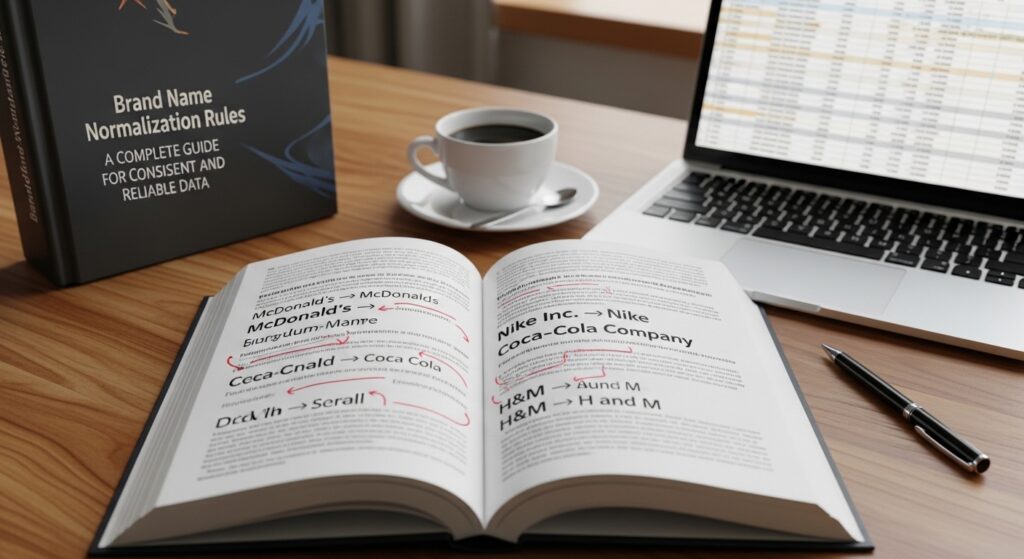
In today’s digital-first economy, brands exist across countless platforms, databases, and systems. From e-commerce listings and CRM records to analytics dashboards and marketing tools, brand names are constantly being created, modified, and stored. Without a clear standard, the same brand may appear in multiple forms, leading to confusion, inaccurate reporting, and operational inefficiencies. This is where brand-name normalization rules become essential.
Brand name normalization is the process of standardizing how brand names are written, stored, and displayed across systems. This article explores what brand name normalization rules are, why they matter, and how organizations can implement them effectively.
Understanding Brand Name Normalization
What Does Brand Name Normalization Mean?
Brand name normalization refers to a set of rules and conventions used to convert brand names into a consistent, standardized format. The goal is to ensure that every reference to a brand follows the same structure, spelling, and style, regardless of where or how the data is collected.
For example, variations like “Apple Inc.”, “APPLE” and “Apple®” may all refer to the same brand. Normalization rules define how these variations should be unified into a single, preferred representation.
Why Inconsistencies Occur
Brand name inconsistencies often arise due to:
-
Manual data entry errors
-
Differences in regional naming conventions
-
Use of abbreviations or suffixes
-
Inclusion of legal terms or trademarks
-
Variations in capitalization and punctuation
Without normalization, these differences can fragment data and reduce its reliability.
Importance of Brand Name Normalization Rules
Data Accuracy and Integrity
Accurate brand data is critical for reporting, analytics, and decision-making. Normalization rules prevent duplication and ensure that all brand-related data points are correctly grouped.
Improved Search and Matching
In e-commerce, advertising, and search systems, normalized brand names improve product matching, search relevance, and recommendation accuracy. Users are more likely to find what they are looking for when brand names follow consistent patterns.
Better Analytics and Reporting
Inconsistent brand names can distort metrics such as sales performance, market share, and customer engagement. Normalized data ensures that analytics reflect real-world performance.
Operational Efficiency
When systems share standardized brand names, integration between platforms becomes smoother. This reduces manual corrections and minimizes errors across workflows.
Core Principles of Brand Name Normalization
Consistency Over Variation
The primary rule of normalization is consistency. A single, authoritative version of each brand name should be defined and used across all systems.
Simplicity and Clarity
Normalized brand names should be easy to read and understand. Unnecessary complexity, excessive symbols, or formatting should be avoided.
Business Relevance
Normalization rules should align with how customers recognize and search for a brand, not just how it appears in legal documents.
Common Brand Name Normalization Rules
Standardizing Capitalization
One of the most basic normalization rules involves capitalization. Organizations often choose a standard format such as:
-
Title Case (e.g., “Nike Air”)
-
Sentence Case (e.g., “Nike air”)
-
Uppercase for abbreviations (e.g., “IBM”)
Once selected, the format should be applied consistently.
Removing Legal Suffixes
Legal terms such as “Ltd.”, “Inc.”, “LLC”, or “PLC” are usually excluded unless legally required. For most operational and marketing purposes, these suffixes add little value and create unnecessary variation.
Handling Trademarks and Symbols
Symbols like ®, ™, and © are typically removed during normalization. While important in legal contexts, they are not useful for data matching or analytics.
Managing Punctuation and Special Characters
Normalization rules often define how to handle:
-
Periods and commas
-
Hyphens and slashes
-
Ampersands versus the word “and”
For example, “H&M” and “H and M” may be normalized to a single preferred format.
Expanding or Standardizing Abbreviations
Abbreviations can create confusion if used inconsistently. Normalization rules should specify whether to expand abbreviations or use a standard shortened form.
Language and Regional Variations
Global brands may have different names in different regions. Normalization rules should account for translations and localized naming while maintaining a clear relationship to the core brand.
Brand Name Normalization in Different Industries
E-Commerce and Retail
In online retail, normalized brand names improve product categorization, filtering, and search accuracy. They also help prevent duplicate listings and incorrect brand associations.
Marketing and Advertising
Advertising platforms rely on clean brand data to measure campaign performance. Normalization ensures that spend and engagement metrics are attributed correctly.
Data Management and Analytics
In data warehouses and BI tools, normalized brand names support accurate aggregation, trend analysis, and forecasting.
Supply Chain and Procurement
Standardized brand names reduce confusion when working with suppliers, vendors, and distributors, improving communication and record keeping.
Challenges in Implementing Normalization Rules
Legacy Data Issues
Historical data often contains numerous inconsistencies. Cleaning and normalizing legacy records can be time-consuming and resource-intensive.
Brand Evolution
Brands may rebrand, merge, or change naming conventions. Normalization rules must be flexible enough to adapt while maintaining historical accuracy.
Human Input Variability
Manual data entry remains a common source of inconsistency. Even with rules in place, human error can introduce variations.
Best Practices for Effective Brand Name Normalization
Establish a Master Brand List
Create a centralized list of approved brand names that serves as the single source of truth for all systems.
Document Normalization Rules Clearly
Rules should be well-documented and accessible to all relevant teams. Clear guidelines reduce confusion and improve compliance.
Automate Where Possible
Automation tools can apply normalization rules during data ingestion, reducing reliance on manual corrections.
Monitor and Review Regularly
Normalization is not a one-time task. Regular audits help identify new inconsistencies and ensure ongoing data quality.
Align Teams Across the Organization
Data, marketing, IT, and operations teams should agree on normalization standards to ensure consistent application.
The Future of Brand Name Normalization
As organizations rely more heavily on data-driven strategies, brand name normalization will continue to grow in importance. Advances in machine learning and natural language processing are enabling smarter normalization systems that can identify variations automatically and suggest standardized formats.
In increasingly complex digital ecosystems, clean and consistent brand data is not just a technical requirement—it is a strategic asset.
Conclusion
Brand name normalization rules provide the foundation for accurate, consistent, and reliable brand data. By standardizing how brand names are written and managed, organizations can eliminate duplication, improve analytics, and enhance operational efficiency.
While implementing normalization rules requires effort and coordination, the long-term benefits far outweigh the challenges. In a data-driven world, consistency is key, and brand name normalization is an essential step toward achieving it.