
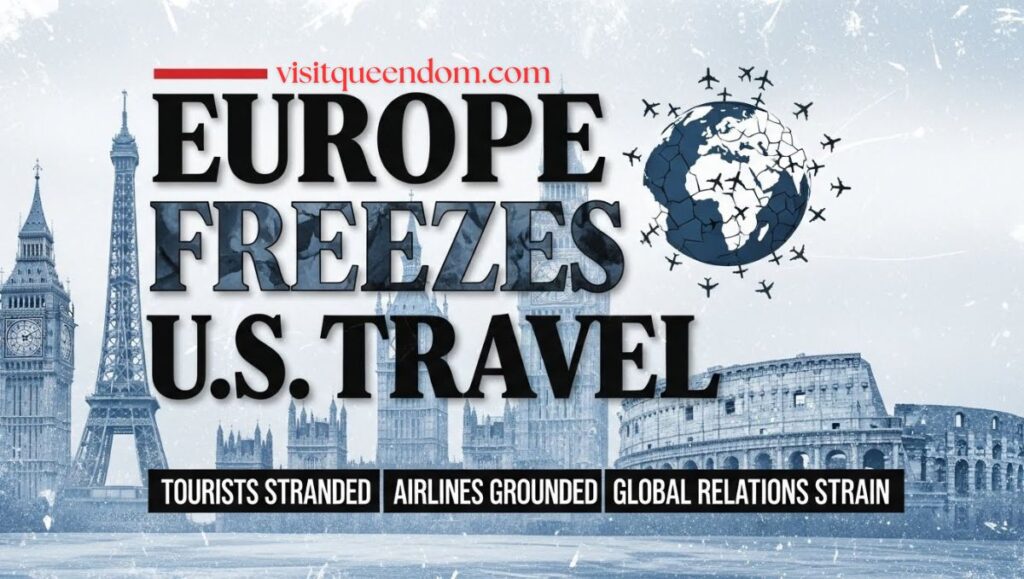
International travel has always been shaped by politics, economics, and global events. Over the years, travelers have witnessed how quickly borders can open—or close—based on shifting circumstances. Recently, discussions around Europe freezes US travel have gained attention, sparking concern among tourists, airlines, and businesses that rely heavily on transatlantic movement. While the phrase may sound alarming, the reality is more nuanced and deeply connected to policy decisions, security concerns, and diplomatic relations.
This article explores what such a freeze could mean, why Europe might consider limiting US travel, and how travelers can adapt in an increasingly unpredictable global travel landscape.
Understanding the Context Behind Travel Restrictions
Travel restrictions rarely happen in isolation. They are usually the result of multiple overlapping factors, including health concerns, geopolitical tensions, and regulatory disagreements. When headlines suggest that Europe freezes US travel, it often reflects debates rather than immediate, blanket bans.
European Union member states must balance freedom of movement with safety and compliance. Any decision affecting US travelers would likely involve lengthy negotiations, coordination among EU nations, and alignment with international aviation rules.
Why Europe Might Limit US Travel
Public Health and Safety Concerns
One of the most common triggers for travel limitations is public health. The COVID-19 pandemic demonstrated how quickly borders could close when infection rates rise. If Europe perceives the US as posing a health risk—due to outbreaks, new variants, or insufficient data sharing—temporary restrictions may be considered.
Such measures are usually framed as protective rather than punitive, aimed at preventing strain on healthcare systems rather than targeting a specific country.
Political and Diplomatic Tensions
Another factor influencing transatlantic travel is diplomacy. Trade disputes, defense disagreements, or policy clashes can spill over into travel regulations. When political trust weakens, cooperation in areas like visa policies and security screening can also be affected.
While it is rare for Europe to act as a single political entity against the US, disagreements at the EU level can slow negotiations and lead to stricter entry requirements.
Data Privacy and Security Regulations
Europe enforces some of the world’s strictest data protection laws, such as the General Data Protection Regulation (GDPR). Conflicts over how passenger data is collected, stored, and shared can impact travel arrangements.
If US airlines or authorities fail to meet European privacy standards, this could complicate travel approvals. In such cases, headlines may suggest that Europe freezes US travel, even though the underlying issue is regulatory compliance rather than outright restriction.
Impact on American Travelers
Uncertainty and Confusion
For US travelers, even the possibility of new restrictions creates uncertainty. Booking international trips requires confidence in entry rules, visa policies, and return options. When policies shift suddenly, travelers may hesitate to make plans at all.
This hesitation doesn’t just affect leisure travelers. Business professionals, students, and families with ties across the Atlantic also feel the impact.
Financial Consequences
Travel disruptions often come with financial costs. Flight cancellations, non-refundable hotel bookings, and travel insurance limitations can quickly add up. Even rumors that Europe freezes US travel can influence pricing, as airlines adjust schedules and demand fluctuates.
Emotional and Cultural Effects
Travel is more than movement; it’s a way to connect with people, cultures, and ideas. Restrictions can strain personal relationships and limit cultural exchange. For many Americans, Europe represents history, art, and shared heritage, making travel limitations feel particularly personal.
How Airlines and the Travel Industry Are Affected
Reduced Flight Capacity
Airlines are among the first to feel the effects of travel uncertainty. If demand drops due to policy concerns, carriers may reduce routes or frequency. This can lead to higher ticket prices and fewer options for travelers.
Airlines must also navigate complex regulatory environments, ensuring compliance with both US and European authorities.
Tourism Industry Losses
Hotels, tour operators, restaurants, and local attractions across Europe depend heavily on American visitors. Any prolonged reduction in US travel can result in significant economic losses, particularly in cities that rely on international tourism.
Southern European destinations, popular with US travelers, are especially vulnerable to these shifts.
Long-Term Industry Adaptation
The travel industry has learned to adapt quickly. Flexible booking policies, digital health passes, and diversified markets are now common strategies. Even if Europe freezes US travel temporarily, businesses are likely to pivot rather than collapse.
What This Means for US–Europe Relations
A Test of Cooperation
Travel policies often serve as a litmus test for international cooperation. How Europe and the US handle disagreements related to travel can set the tone for broader diplomatic relations.
Collaboration, transparency, and compromise are essential to prevent temporary issues from escalating into long-term conflicts.
The Role of Negotiation
In most cases, travel disputes are resolved through negotiation rather than confrontation. Technical agreements on health data, security screening, or passenger information can reopen borders without major political fallout.
History shows that both sides value transatlantic ties too much to allow prolonged isolation.
Tips for US Travelers Planning European Trips
Stay Informed Through Official Sources
Rather than relying on headlines, travelers should consult official government websites, airline updates, and embassy advisories. These sources provide the most accurate and current information.
Choose Flexible Booking Options
Flexibility is key in uncertain times. Look for airlines and accommodations that offer free changes or cancellations. Travel insurance that covers policy-related disruptions can also provide peace of mind.
Prepare Documentation Carefully
Ensure passports are valid, visas are in order, and any required digital forms are completed correctly. Even minor documentation errors can cause problems when entry rules tighten.
Consider Alternative Destinations
If uncertainty persists, travelers may explore destinations with clearer entry policies. While Europe remains a favorite, other regions offer rich cultural experiences and fewer restrictions.
Media Headlines vs. Reality
It’s important to separate media language from actual policy. Phrases like Europe freezes US travel are often used to capture attention, even when restrictions are limited or under discussion.
In reality, most travel policies are complex, conditional, and subject to rapid change. Rarely do they represent a complete shutdown without exceptions.
The Future of Transatlantic Travel
Looking ahead, travel between Europe and the US is likely to remain strong despite occasional setbacks. Shared economic interests, cultural connections, and political alliances create strong incentives to keep borders open.
Technology will also play a growing role, from digital visas to automated border control systems. These innovations aim to make travel safer, more efficient, and less vulnerable to sudden disruptions.
Final Thoughts
The idea that Europe freezes US travel can sound dramatic, but it usually reflects deeper conversations rather than definitive action. Travel restrictions are shaped by health, security, and diplomacy, and they often evolve as circumstances change.
For travelers, the best approach is preparation, flexibility, and patience. For governments, cooperation remains the most effective path forward. Despite challenges, the enduring connection between Europe and the United States suggests that travel will continue—adapting, but never disappearing.