
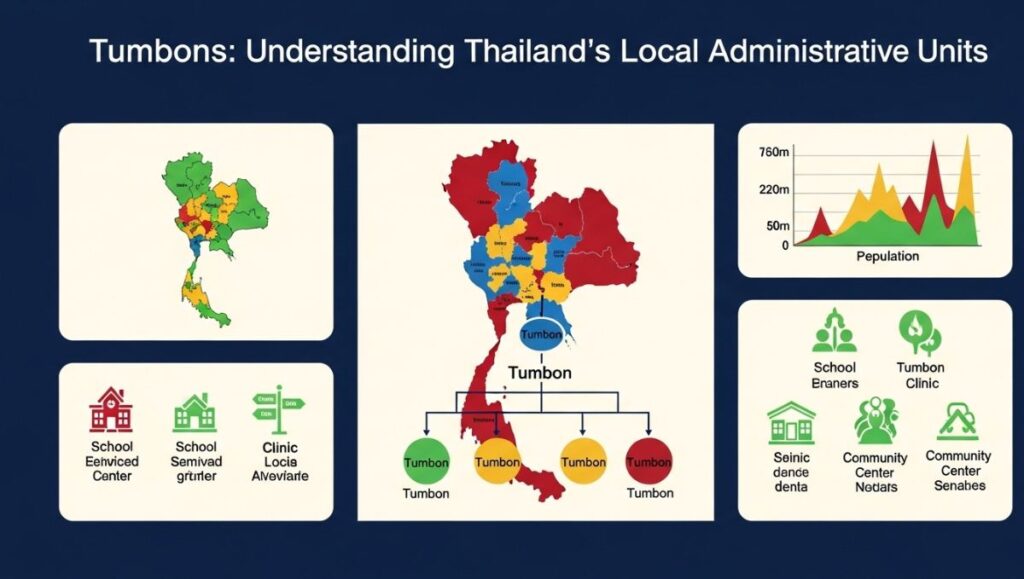
Tumbons are a fundamental part of Thailand’s administrative system and play a crucial role in local governance, community identity, and rural development. Often translated as subdistricts, tumbons sit between districts and villages in the country’s hierarchical structure. While they may appear small on the map, tumbons are vital to how Thailand manages public services, cultural preservation, and local participation.
Understanding tumbons provides insight into how Thailand balances centralized authority with grassroots administration. They represent the closest formal government presence in everyday life for millions of Thai citizens, particularly in rural and semi-rural areas.
Definition and Meaning of a Tumbon
A tumbon (ตำบล) is an administrative subdivision of a district, known in Thai as an amphoe. Each tumbon is composed of several villages, called muban, and serves as a localized unit for governance, planning, and public service delivery.
In English-language contexts, tumbons are commonly referred to as subdistricts. However, the term “tumbon” carries cultural and administrative nuances that go beyond a simple translation. It reflects historical settlement patterns, shared resources, and long-standing community ties.
Historical Development of Tumbons
The concept of tumbons dates back centuries, long before modern administrative reforms. Traditionally, Thai communities were organized around shared agricultural land, water sources, and temples. These clusters naturally evolved into what we now recognize as tum-bons.
During the late 19th and early 20th centuries, Thailand introduced formal administrative reforms to strengthen governance and improve tax collection. Tumbon were officially integrated into the national system as intermediate units between districts and villages. Over time, their role expanded from basic administration to include development planning and local decision-making.
Administrative Structure of a Tumbon
Each tumbon is made up of multiple villages, usually ranging from five to fifteen, depending on population and geography. The villages maintain their own leaders, but the tumbon acts as a coordinating body for broader initiatives.
Tumbons operate under either a Subdistrict Administrative Organization (SAO) or a subdistrict municipality, depending on population density and urban development. These bodies are responsible for managing budgets, local infrastructure, and public services within the tumbon’s boundaries.
Role of Local Government in Tumbons
Local government institutions within tumbons are designed to bring decision-making closer to the people. Elected councils and chiefs represent community interests and work with district authorities to implement policies.
Key responsibilities of tumbon administrations include:
-
Maintaining local roads and drainage systems
-
Supporting primary healthcare and sanitation
-
Managing waste collection and environmental protection
-
Promoting education, culture, and community events
This localized governance helps ensure that development projects align with the real needs of residents rather than top-down directives.
Tumbons and Community Identity
Beyond administration, tumbons serve as strong symbols of local identity. Many residents identify closely with their tumbon, viewing it as an extension of their heritage and lifestyle. Festivals, traditions, and dialects often vary from one tumbon to another, even within the same district.
Local temples, markets, and schools frequently act as social hubs, reinforcing community cohesion. These shared spaces foster cooperation and collective responsibility, which are central to the tumbon’s social fabric.
Economic Importance of Tumbons
Tumbons play a key role in Thailand’s rural economy. Agriculture remains the backbone of most tumbons, with rice farming, fruit cultivation, and livestock raising being common activities. Local administrations often support farmers through irrigation projects, training programs, and cooperative initiatives.
In recent years, many tumbons have diversified their economies by promoting One Tumbon One Product (OTOP) initiatives. These programs encourage communities to develop unique local products, such as handicrafts, textiles, or processed foods, that can compete in regional and international markets.
Tumbons and Tourism Development
Tourism has become an increasingly important opportunity for tumbon seeking sustainable growth. Many subdistricts capitalize on their natural landscapes, cultural traditions, and historical sites to attract visitors.
Community-based tourism allows travelers to experience authentic local life while providing income directly to residents. Homestays, traditional cooking experiences, and eco-tourism activities are often organized at the tumbon level, ensuring benefits are shared across the community.
Education and Social Services in Tumbons
Primary schools and early childhood education centers are commonly managed or supported at the tumbon level. Local administrations collaborate with national agencies to improve access to education, especially in remote areas.
Social welfare services, such as support for the elderly, people with disabilities, and low-income households, are also coordinated through tumbon offices. This proximity enables faster response times and more personalized assistance.
Public Health and Safety Responsibilities
Tumbons play a vital role in maintaining public health standards. Local health volunteers often work alongside government clinics to promote disease prevention, sanitation, and nutrition awareness.
During emergencies, such as floods or health crises, tumbon administrations act as first responders. Their familiarity with local geography and residents allows them to coordinate relief efforts efficiently and effectively.
Environmental Management at the Tumbon Level
Environmental conservation is another growing responsibility of tumbons. Local authorities manage waste disposal, protect water sources, and promote sustainable land use. Many tumbons implement recycling programs and environmental education campaigns to reduce pollution.
In areas prone to flooding or drought, tumbon administrations collaborate with communities to develop long-term resilience strategies, including water management systems and reforestation projects.
Challenges Facing Tumbons
Despite their importance, tumbons face several challenges. Limited budgets and resources can restrict development efforts, particularly in remote regions. Population decline due to urban migration also affects labor availability and economic growth.
Balancing modernization with cultural preservation is another concern. As infrastructure improves and tourism grows, tumbons must carefully manage change to protect their unique identities and traditions.
The Future of Tumbons in Thailand
The future of tumbons lies in continued decentralization and community empowerment. Digital tools, improved transparency, and greater citizen participation are reshaping how local governments operate.
By strengthening local leadership and encouraging sustainable development, tumbon can remain vibrant centers of Thai life. Their ability to adapt while preserving cultural roots will determine their long-term success in an increasingly interconnected world.
Conclusion
Tumbons are far more than administrative boundaries. They are living communities that reflect Thailand’s history, culture, and collective spirit. Through local governance, economic initiatives, and social cohesion, tumbons continue to play a crucial role in shaping everyday life across the country.
Understanding tumbons provides valuable insight into how grassroots administration supports national development while preserving local identity. As Thailand evolves, tumbons will remain essential pillars of its social and administrative framework.